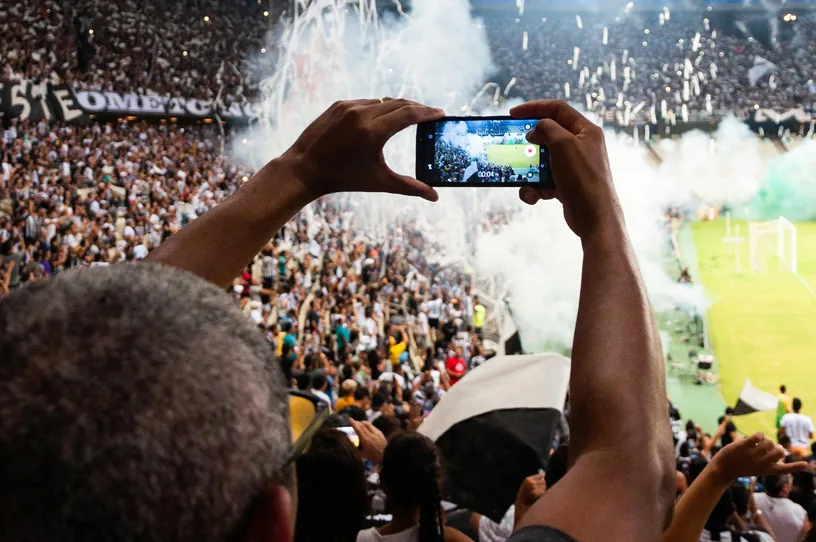
Social media is reshaping the sports industry — and the shift is still accelerating. Fans gather on Instagram, TikTok, and X to follow their teams, debate the moment, and watch sports they can't attend in person. A growing share watch primarily, or exclusively, on social.
That changes the business of sport. Social media's impact on fan engagement is advancing faster than the adoption of TV broadcasts did, and it rewards the teams and leagues that deliver more content through digital channels. Fans of every age now turn to social platforms for sports content:
- 51% get sports content on Facebook
- 46% on YouTube
- 31% on Instagram
- 25% on X
The most-followed accounts on the planet are sports accounts. Real Madrid has 134 million followers on Instagram. The NBA has 88 million. Cristiano Ronaldo — the most-followed person anywhere — has more than 580 million. Social media is now the preferred way fans follow sport. For any league, team, or competition not yet built for it, the time to move is now.
How Social Media Is Changing Sports
Media has reshaped sport for decades: live broadcast TV, then cable, then OTT subscription, now social. The difference is direction. Broadcast TV is a one-way push. Social media is a two-way conversation that lets fans engage, react, and feel connected to the teams and athletes they love.
Social media is now woven into sports culture. Fans don't just watch — they film games, share memes, trade trash talk, and actively participate. Five effects stand out.
1. Sports Marketing
The combination of sports and social media is what delivers the "always on" experience fans expect. Marketers use social channels to promote events and activities, and increasingly pull fans into creating original user-generated content that builds deeper connection. For the playbook in practice, see how it works for sports organizations.
2. The Source of Truth for Stats and Information
Athlete and team accounts have become essential destinations — especially for younger fans forming lifelong loyalties. 58% of 16- to 24-year-olds and 49% of 25- to 34-year-olds follow athletes on social; 43% in each group follow leagues. Nearly every team now runs multiple channels, because fans use social for sports news more than ever.
3. Sports Leagues' Global Reach
Social media gives leagues direct, real-time access to fans worldwide — and a far larger audience than any home market. The NBA, for instance, has more fans in the U.K., Germany, and China than in the United States.
4. Live Streaming
For decades, TV was the only way to broadcast a live event. Now organizations and media outlets stream games and real-time content straight to mobile screens. 39% of American adults watch sports via online live streams, and fans aged 18–24 are more than twice as likely to live-stream as fans 55 and older.
5. New Revenue Opportunities
Broadcasters now use digital media from their league partners to attract and retain audiences, which makes digital media rights a critical component of broadcast deals. The same social buzz around players and teams lifts ticket and merchandise sales — amplified further when sponsorship enters the frame.
How Social Media Impacts Sports Organizations
Social media gives organizations a direct line to fans — including the casual ones who rarely tune into a broadcast. It's where relationships get built: announcing games, sharing lineups, spotlighting a performance, keeping audiences connected to the teams and athletes they follow.
Beyond news, social powers fan engagement and partner revenue through targeted, content-driven campaigns. Clubs like Paris Saint-Germain have grown their audiences through athlete advocacy on social. The organizations that do it consistently use social to:
- Keep fans current on signings, contracts, announcements, and events
- Drive engagement with original content from leagues, teams, coaches, and players
- Promote events and teams
- Share live content — video, real-time games, play-by-play, goal alerts
- Gather fan feedback and authentic UGC through polls and prompts
- Build new revenue from partners and fans on the digital media captured every day
How Social Media Impacts Revenue
Today, broadcast rights, sponsorships, and ticket sales make up most of a team or league's revenue. Social media expands all three — and opens new ones. Sports properties can take their digital media feeds, the short-form images and clips created for social, and turn that inventory into an asset: valuable to sponsors, fans, and alumni alike. Content stops being a cost center and becomes a line of revenue.
How Social Media Impacts Athletes
A decade ago, reaching your favorite athlete was nearly impossible. Social media closed that gap. Athletes run personal accounts to engage fans, promote sponsors, and share their lives — and in doing so, reveal the human side behind the performance. That relatability builds a personal brand, which strengthens endorsement value and career opportunities. With the right strategy, athletes enhance their public image, build a loyal community, and position themselves for what comes next.
Social Media in Sports: FAQ
Why is social media important in sports?
It's the primary channel fans use to follow sport. Social builds two-way communication with global, digital-first audiences, deepens engagement, and distributes content at the speed fans expect — which makes it essential to how organizations grow and keep their audiences.
How has social media changed sports media?
It moved sports media from a one-way broadcast to a two-way conversation. Marketers run campaigns and announcements directly on social, and outlets distribute to mass audiences on the same platforms — collapsing the distance between the moment and the audience.
How does social media affect athletes?
Athletes are now commercial brands as well as competitors. Social lets them build a personal brand, connect with fans year-round, and increase their value for endorsements and other opportunities.
How does media influence sport?
Media raises awareness, showcases the values of sport, and carries events across the world. Organizations, outlets, fans, and athletes all use social to communicate — which is why sport is now woven into daily digital life.
Digital media drives fan engagement
See how leagues, teams, and brands run real-time content operations on Greenfly.